

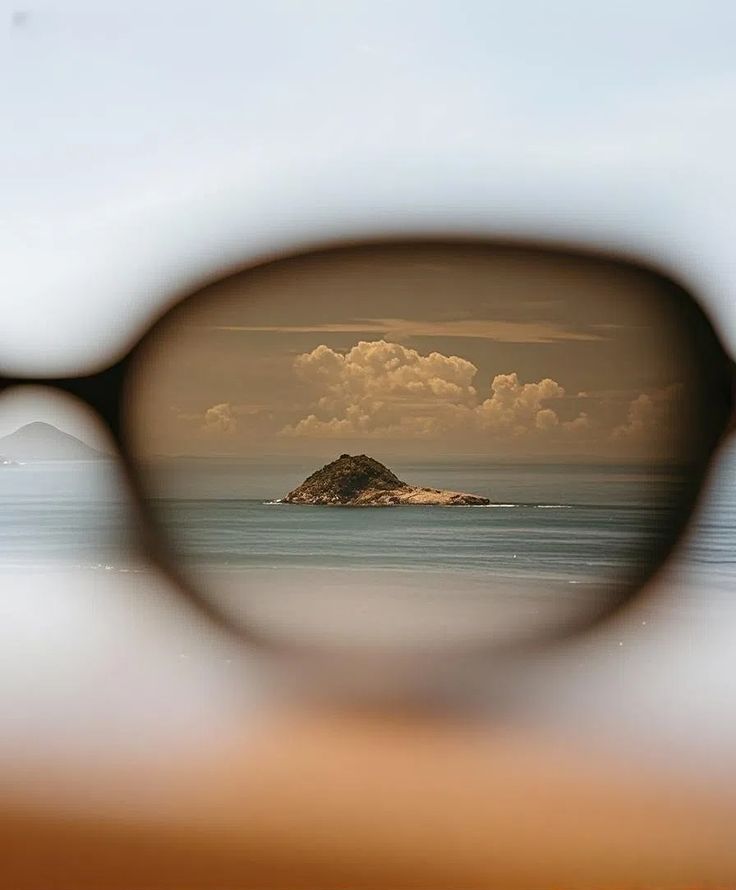
What's the Difference and Which One Do You Actually Need?
Right, let's talk lenses.
If you've ever stood in a sports shop or scrolled through eyewear online and seen both "polarised" and "mirrored" thrown around like they mean the same thing, you're not alone. Most people assume they're interchangeable. They're not. And once you understand what each one actually does, choosing the right pair for your training becomes a lot more straightforward.
No jargon. No faff. Just a proper explanation.
First Things First: What Are We Actually Talking About?
Polarised and mirrored lenses solve different problems. One is about what happens to light before it reaches your eye. The other is about what happens to light before it even reaches the lens. They can overlap, they can exist independently, and knowing which one you need comes down to how and where you train.
Let's take them one at a time.
Polarised Lenses: The Glare Fighter
Polarised lenses are designed to deal with one specific and genuinely irritating problem: reflected glare.
When sunlight hits a flat, reflective surface like water, wet tarmac, a car bonnet, or even a glossy road marking, it bounces back at a horizontal angle. That horizontal light is what causes the sharp, blinding glare that makes you squint, lose focus, and occasionally nearly miss a kerb. Not ideal.
A polarised lens has a chemical filter built into it that blocks horizontal light waves specifically. The result is that reflected glare gets cut almost entirely, while the light coming from other directions passes through normally. Your vision stays clear, comfortable, and sharp without that constant battle against the brightness.
For runners and cyclists who spend time on open roads, near water, or training through unpredictable British weather where wet surfaces are basically guaranteed, polarised lenses make a significant difference. Your eyes are doing less work, your focus stays where it needs to be, and sessions feel less draining in a way that's hard to quantify but very easy to notice.
One thing worth knowing: polarised lenses can occasionally cause issues with reading certain digital screens, like a GPS watch or a cycling computer. The filter can make the display look odd at certain angles. It's not a dealbreaker, but it's worth being aware of.
Mirrored Lenses: The Light Deflector
Mirrored lenses work from the outside rather than the inside. Instead of filtering light as it passes through the lens, the reflective coating on a mirrored lens bounces a significant portion of light away before it ever gets through at all.
Think of it like a one-way window. You can see out clearly. But from the outside, light is being reflected straight back. The result is reduced overall light transmission, which makes mirrored lenses particularly well suited to bright, sunny conditions where the sheer volume of light is the issue rather than glare from a specific reflective surface.
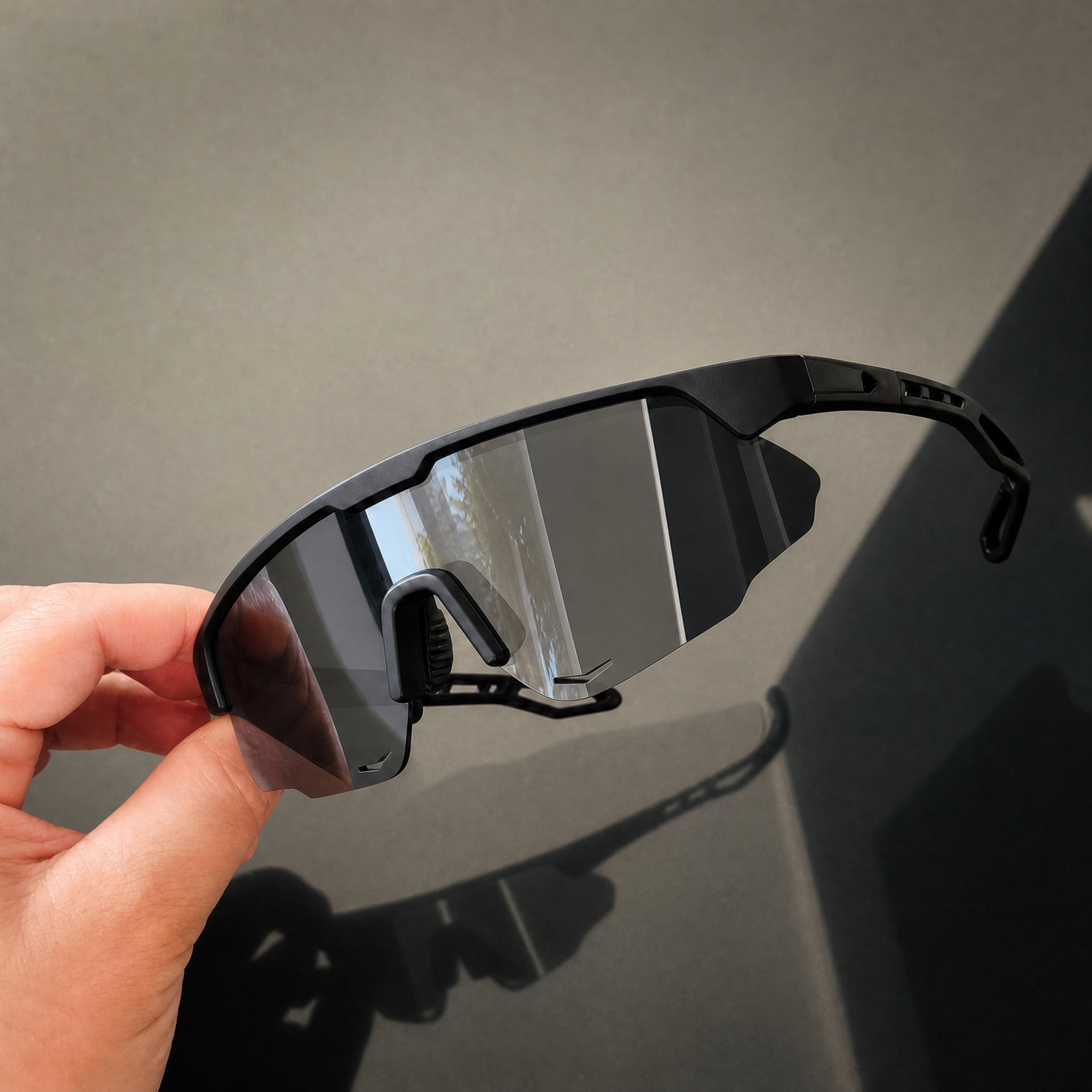
They also look brilliant, which is not irrelevant. The silver mirrored lens in the AVN Elite is a good example: functional in direct sunlight, sharp looking on and off the track.
Mirrored lenses are not inherently polarised though. Some mirrored lenses also have a polarised filter underneath the reflective coating, but many do not. If glare from flat surfaces is your main concern, a mirrored lens without polarisation will reduce overall brightness but won't specifically target that horizontal reflected light the way a polarised lens will.
So What Actually Separates Them?
Here is the clearest way to think about it:
Polarised lenses target a specific type of light, namely reflected horizontal glare, and eliminate it. They are precision tools for a precision problem.
Mirrored lenses reduce the total amount of light entering your eye by reflecting a portion of it away. They are volume control for brightness.
Both improve comfort in sunny conditions. But they do it differently, and they are at their best in slightly different scenarios.
Which One Is Right for You?
This really comes down to where and how you train.
If you run or cycle on roads, especially in wet conditions or near water, polarised lenses are going to be your best mate. The glare reduction is noticeable from the first session and your eyes will thank you for it over longer distances.
If you train predominantly in bright, open conditions, like fell running, open road cycling, or long trail sessions in full sun, mirrored lenses come into their own. The reduction in overall light volume keeps things comfortable without the specific anti-glare focus of a polarised lens.
If you want the best of both worlds, look for lenses that combine a mirrored coating with a polarised filter underneath. That combination gives you glare elimination and light reduction in one.
A Word on UV Protection
Neither polarised nor mirrored automatically means UV protected. This is a common misconception and it is worth clearing up.
UV400 protection is a separate specification that refers to the lens blocking 100% of UVA and UVB radiation. A lens can be mirrored, polarised, or both, and still let UV light through if the UV protection has not been built in.
Always make sure UV400 is confirmed on any pair you buy. The colour, coating, and technology all affect performance and comfort. UV400 protection affects your eye health long term. It is non-negotiable.
The AVN range includes UV400 protection across all three styles, so that part is already sorted whichever colourway or lens finish you go for.
The Takeaway
Polarised and mirrored lenses are not the same thing, and they are not competing with each other either. They solve different problems, and the right choice depends on your training environment.
Glare from reflective surfaces: go polarised.
Bright overall light conditions: go mirrored.
Both: find a lens that combines the two.
And whatever you choose, make sure UV400 is part of the deal. Everything else is performance and preference. That part is just common sense (wink!)

Leave a comment
This site is protected by hCaptcha and the hCaptcha Privacy Policy and Terms of Service apply.